This post is longer than the usual Nurturing Thursday entry, but please bear with me because it is meant as a continuation of last week’s half-baked post, and I hope it will make more sense! Before I got distracted by drama on someone else’s blog about a plagiarism incident, I had planned to write about social relationships in the modern world and how fragile they often seem. Sometimes it feels as if there is nobody we can count on to help us get through life—no safe ground.
 

Avalanche warning sign with mountains in background

(Creative Commons image via flickr)
 

Later I realized why I hadn’t been able to write on this subject while distracted by online drama. It’s all part of the same problem! In the small villages of long ago, people relied on their family and neighbors for survival. But in today’s world, where we just drive to the store and buy whatever we want, it feels like everybody is on their own. It’s good that we have more choices in the modern era—we are free to leave an unpleasant job, an abusive spouse, or a neighborhood we no longer enjoy. But the flip side of having so much freedom is that nobody has to stay with us either, and that feels very scary.

About five years ago, I was involved with an online community that fell apart. Efforts to punish bad behavior (such as by demanding that everyone delete their links to a blog where sexist stuff had been posted) went too far and left the community divided into several warring camps. Nasty gossip and conspiracy theories ran wild. As Elizabeth mentioned last week in my comments, online wrongdoing has to be punished so that the community can feel safe and enjoy blogging. But where do we draw the line to ensure that the punishment doesn’t end up being uglier than the crime?

Our ancestors’ villages had plenty of arguments and gossip too, but there were natural constraints. People knew that they couldn’t get too nasty with each other because they would need help if their barn caught fire or some other calamity happened. But in the modern world, we don’t need our virtual neighbors any more than we need our real-life neighbors. There is always somewhere else we can go; and of course, they don’t need us either. They’re free to tell us to shove off, as rudely as they want, whenever they feel like it.

So, when we put emotional energy into building relationships, it always feels risky. While I don’t expect anyone reading my blog would decide (for example) that I need to be punished for writing a bad Nurturing Thursday post last week, unexpected stuff happens all the time. There is never any certainty because the old rules of social interaction have gone out the window. Some of that is good because we have been clearing away ignorant prejudices, but some of it leaves us feeling vulnerable and anxious. How do we build a culture where people respect, value, and support each other just because it’s the right thing to do?

Nurturing Thursday was started by Becca Givens and seeks to “give this planet a much needed shot of fun, support and positive energy.” Visit her site to find more Nurturing Thursday posts and a list of frequent contributors.

Motivational authors often advise against using weak words like “should” and “someday” that amount to nothing but idle fantasies, lacking any definite commitment. Such words can lull us into believing that we are taking constructive action when in fact we haven’t done anything. We may think we’re making progress along the road to someday; but really we’re just frozen in place, not moving in any direction.
 

Three-way intersection with light snow. 

While I agree with being careful not to confuse fantasies with action, it’s also important not to jump into action without forethought or to get overly stressed working on plans for everything we might possibly want. “Should” and “someday” can be useful in their proper place, as preliminary steps toward action. Before committing ourselves to act, we first need to reflect on whether the action would be a good thing to do—whether we should do it. If the answer is yes, then we move on to considering the logistics. Although some plans can be made right away, it’s not practical to immediately set an action date for every idea that comes to mind.

That’s where putting “someday” items at the far end of the to-do list comes in. For example, someday I would like to travel to Australia, but right now there are plenty of other things that have higher priorities in my life. So, for now, it’s just a fantasy, and it doesn’t need to be anything else. If I considered it to be more important, I would research the details and put together an action plan, complete with specific dates. But until then, it’s just one of my somedays, and that’s okay.

What’s not okay—and all too easy to do, unfortunately—is to get stuck in a deep rut, avoiding even the smallest changes to our routines because of fear or laziness, while telling ourselves that we should do better and someday we’re going to work on it. In that context, “should” and “someday” are nothing more than excuses for hanging onto bad habits in the here and now. And as excuses go, they’re pretty worthless ones. Although change may seem scary or difficult, often all that’s needed is simply to take a small action each day, building better and healthier habits as time goes by.

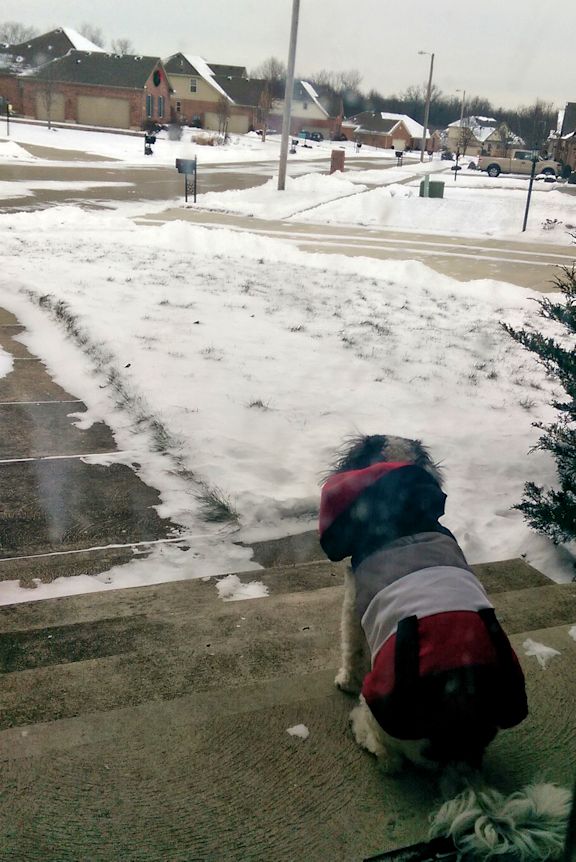
In today’s world, there are lots of activities to keep us busy—concerts, sporting events, road races, and more. But what’s to be done with all the T-shirts? For most of us, they’re not everyday wear and just take up closet space, sprawling from one stack into another. We might find uses for them occasionally, such as yard work or painting. They might come in handy for keeping a puppy warm on a snowy November day…
 

Puppy wearing an old T-shirt. 

But in truth, they’re mostly just clutter and need to be dealt with as such. Running that half-marathon 20 years ago might have been fun, but that doesn’t mean the T-shirt has to be kept forever. The memories can be preserved just as well by taking digital photos of the shirts before turning them into rags or just throwing them directly into the trash—and honestly, after decades have gone by they probably aren’t much more than rags anyway.

About Clutter Comedy: Every Sunday (which I envision as a day of rest after a productive week of de-cluttering) I post a Clutter Comedy article describing my most memorable clutter discovery of the week. Other bloggers who wish to join in are welcome—just post a link in the comments! There’s no need to publish any “before” photos of your clutter, if they are too embarrassing. The idea is simply to get motivated to clean it up, while having a bit of fun too!

I had planned to write on a topic suggested by Elizabeth in last week’s comments—the anxiety that comes from not having many close friends or knowing who will be there for us when we need help, as contrasted with our ancestors’ experiences in small, close-knit villages. But instead, I got into a conversation on another blog about standing up for oneself while also maintaining a kind and positive tone, and where to draw the line so as not to react unkindly out of anger.
 

Word-art with image of computer screen saying "Be kind online."

(word-art image courtesy of Bits of Positivity)
 

How do you find the right balance between standing up for yourself online and avoiding unnecessarily negative situations? If someone wronged you online, such as by copying your material without permission, would you publicly demand that they take it down and apologize, in the hope of putting a stop to their bad behavior? Would you decide that the negative energy wasn’t worth it and, after trying to resolve the matter privately, just let it pass? Or would you take legal action? What would you consider the kindest and most self-nurturing way to deal with a situation like that?

Nurturing Thursday was started by Becca Givens and seeks to “give this planet a much needed shot of fun, support and positive energy.” Visit her site to find more Nurturing Thursday posts and a list of frequent contributors.

To read all posts in this series from the beginning, click here.


I recently visited a blog that has a word-art image in the sidebar telling visitors, “Don’t be anxious. Pray instead.” That advice, I would say, is the eleventh step of a recovery program in a nutshell. After completing the previous steps and becoming more aware of past mistakes, it’s not always easy to feel confident about making better decisions in the future. Having messed up so much without even noticing many of the ways we went wrong, how can we feel sure that it won’t happen again?

At Step Eleven of a traditional 12-step program, the remedy is described as follows: “Sought through prayer and meditation to improve our conscious contact with God as we understood Him, praying only for knowledge of His will for us and the power to carry that out.” There are other versions not as closely tied to Christian beliefs as this one; but whatever wording one prefers, Step Eleven is about aligning actions with values. It is an ongoing effort to make decisions based on conscious awareness of what is the right thing to do, instead of just going with what feels good at the time.

So, when faced with a decision, rather than worrying about all the ways things might get messed up, Step Eleven advises finding moral guidance and empowerment according to one’s beliefs. Meditation is helpful both because it reduces anxiety and because it creates a calm, peaceful space for reflection and being present in the moment. There are many questions on which to reflect—for instance, whether a particular choice comes from a place of love, whether others who encounter its results will feel uplifted, and whether it will contribute to or detract from the sum total of happiness in the world.

Of course, we can’t know exactly what the results of our choices will be; and the possibilities are vast. That’s why “improve” is the action word here—it’s all about slowly developing more understanding of what is right and how to get it done, rather than burdening ourselves with unrealistic expectations of making no mistakes. Incremental changes, however small, can be very powerful as time goes by.

Even the simple act of staying focused in the moment helps to keep negative thoughts away. Negativity tends to creep up unnoticed when, instead of being fully aware in the present, the mind wanders off into imaginary scenarios of what might happen in the future or what could have gone differently in the past. Often those scenarios are full of pointless drama and blame, making us feel upset about stuff that doesn’t even exist in real life! Although seeking to improve conscious awareness won’t completely shut off the internal drama generator, it can at least help us to notice more quickly when we have thoughts that need to be shifted in healthier directions.


Click here to read Recovering from Negativity, Step Twelve.

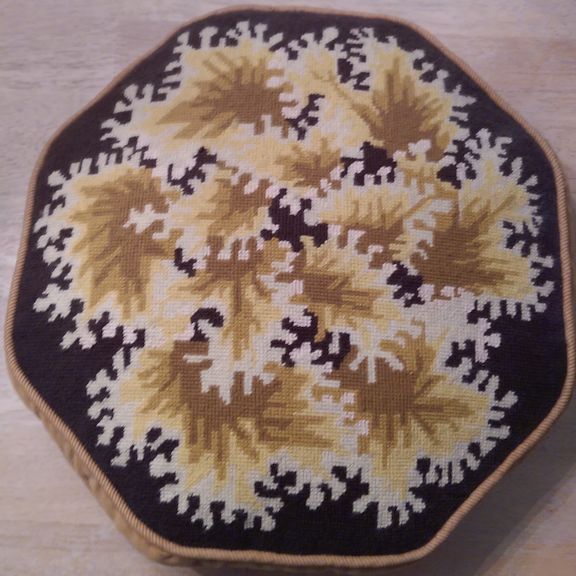
I found something on a shelf in my house last week that looked like a cloth envelope. I have no clue how it got there or what its purpose might have been. Maybe it was meant to hold a small pillow? I can imagine something like that being used to protect a small pillow from dust and dirt in the long-ago days before washing machines were invented. I did not make it myself and can’t think of any reason why I would have bought it, so I’m baffled.
 

Something that looks like a cloth envelope. 

Maybe it was included in the package with a sheet set or quilt I bought many years ago, and I put it on the shelf and forgot about it? That’s the only explanation that comes to mind. Anyway, whatever it might have been, one thing is abundantly clear: I have no need to keep it. Clutter, begone!

About Clutter Comedy: Every Sunday (which I envision as a day of rest after a productive week of de-cluttering) I post a Clutter Comedy article describing my most memorable clutter discovery of the week. Other bloggers who wish to join in are welcome—just post a link in the comments! There’s no need to publish any “before” photos of your clutter, if they are too embarrassing. The idea is simply to get motivated to clean it up, while having a bit of fun too!

Humans, by nature, are a social species. We rely on others for so much in our everyday lives; but all too often, we take that for granted. When we get overloaded with responsibilities and to-do lists, we may feel obligated to do everything ourselves, without expecting help. If that goes on too long, we start to take pride in being so tough we don’t need anything from others. That’s when a major shift in perspective is needed.
 

Long suspension bridge with city in background.

(Creative Commons image via flickr)
 

A suspension bridge is a masterpiece of engineering—a complex arrangement of trusses, cables, and towers, all perfectly aligned. But if we’re preoccupied with the traffic and our errands, we might not even notice what’s holding us safely above the water. As for the city in the distance and the world beyond, we rely on them to supply all our needs. In the modern age, our food, water, shelter, and clothing all come through the work of others. Being tough and self-sufficient is just a story we tell ourselves! We’d do much better to consider all the ways we are supported as we go through life, and to cultivate gratitude for them.

Nurturing Thursday was started by Becca Givens and seeks to “give this planet a much needed shot of fun, support and positive energy.” Visit her site to find more Nurturing Thursday posts and a list of frequent contributors.

A dream filled with whining mosquitoes gave way to the equally unwanted buzz of the alarm clock as Aurora, still more than half asleep, smacked the off button. Something plastic clattered to the cold hardwood floor in the dark—she’d bumped Darrell’s photo off the dresser again. She switched on a light, blinking as her eyes adjusted. Darrell smiled up at her from a cheap frame in a dusty corner, his blue eyes crinkling at the corners and sandy-blond hair falling to his shoulders.

She would have plenty of time for dusting after work, alone in the apartment as usual. The photo was about all she saw of Darrell most days, since he’d taken a truck-driving course last year—not long after their marriage—and gotten a job as a long-haul trucker. He was always talking about how much he loved the job: driving the big rigs, seeing the country, being part of life’s adventures rather than just watching life go by.

Aurora could understand that feeling. After all, they had met while working at a McDonald’s just off the interstate. Last month, she had been promoted to first shift manager. The job was mostly okay, but some days she felt like it would be great to jump in a truck and never look back. Darrell had ambitious plans, saving up to buy his own truck—he had in mind that Aurora would learn to drive it and they’d be an owner-operator team.

But for now, all she drove was a beat-up old Chevy sedan, which at present was sitting in the parking lot covered with about three inches of snow—as she discovered when she looked out the bedroom window. The forecast hadn’t predicted snow overnight, and Aurora hadn’t thought to set her alarm clock earlier. Now she’d have to hurry to work, especially since she was responsible for unlocking the restaurant to let in the morning crew.

She dressed quickly and went outside, putting on thick gloves to keep her hands warm while she brushed snow off the car. A bitterly cold wind blew from the north, and the predawn sky was still pitch black. A city truck had just gone by, plowing up the snow into big dirty heaps. Aurora drove the few blocks to the highway and got on the ramp. There wasn’t much traffic yet this morning. She passed a semi, noting a Bible verse on its trailer. 1 Corinthians 16:14, it proclaimed: Let All Your Work Be Done with Love.

Well, that certainly hadn’t been the first thought in her mind, after waking up in the dark on a morning like this. And there was a slowpoke ahead in the exit lane, crawling down the ramp she needed to take. Some people had no idea how to drive in the snow. She drummed her fingers on the steering wheel as the usual list of complaints ran through her head: dreary, dull, dismal, dark, depressing winter. The sun wouldn’t rise for a long time yet. It was no wonder ancient people had made up myths about it, telling stories around the fire on the long, dark nights.

In the story from which she got her name, a chariot pulled the sun across the sky. Every morning as dawn approached, the celestial gates had to be opened to allow the chariot to pass. That was the goddess Aurora’s task. The myths had seemed silly, learning them in school; but at least they had enough simple, realistic details that it wasn’t hard to imagine being in the stories. Even goddesses had to wake up before dawn and trudge off to work.

She pictured her mythical namesake on a chilly Mediterranean morning, wrapped tightly in a wool cloak as she made her way along a windy mountain trail. From somewhere far below came the sounds of the sea. The moon had just set, and she had only the stars to light her path. She took a deep breath that tasted of pine and of the snow on the high peaks.

In the east, a pale glow brightened—the sun! Excitement rose within her as well, and she started running, the path coming clearer at each step. Her sandals slapped against the stony earth, in harmony with the hoofbeats echoing through the sky as the chariot approached. There they were before her, the golden celestial gates, shining in perfect glory! She lifted the bar, letting the gates swing wide as the chariot thundered through, feeling the thrill of its passage as it rumbled by…

The only rumbling as Aurora parked the Chevy outside the McDonald’s came from a semi on the interstate carrying cold rolled steel. The imagined hoofbeats still echoed in her mind, all the same, and the unexpected joy lingered. It wouldn’t be long—one of these days, she and Darrell would have their own truck, driving out of the east like the chariot of the sun. For now, though, her place in the world could be a meaningful one, right here where she was. Opening the gates.

Aurora found herself smiling as she unlocked the door of the restaurant, doing her work with love.

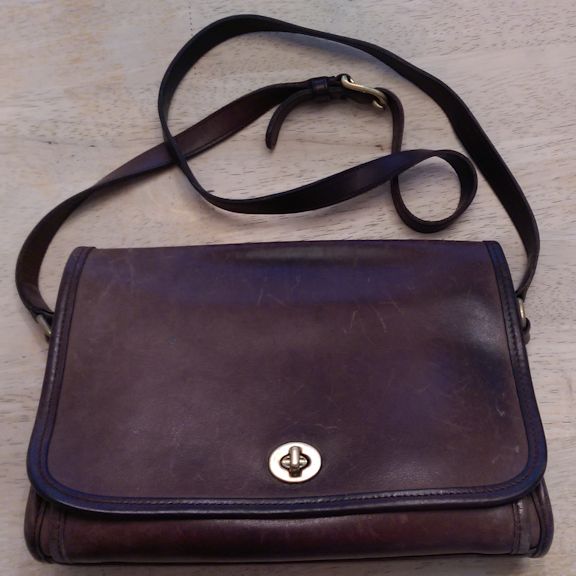
My aunt gave me a nice stylish leather briefcase when I was a student 30 years ago. I thought it was a lovely gift, and I imagined myself carrying it into high-powered business meetings, courtrooms, etc., full of very important documents. I associated it with ambition and success.
 

Old brown leather briefcase 

Because it brought good memories to mind, I made the mistake of letting it sit around and turn into clutter. That style hasn’t been in fashion for a very long time, the leather is creased, the edges are frayed, and it just looks like (and totally is) junk! As for ambition, all the thoughts I once associated with the briefcase are outdated too. Like most people nowadays, I don’t have a job that involves carrying important papers. Documents get attached to emails, meetings take place by way of teleconferencing software, and so forth. I’ll probably buy a new modern briefcase at some point, when I see one that I like really well, but there’s certainly no hurry!

About Clutter Comedy: Every Sunday (which I envision as a day of rest after a productive week of de-cluttering) I post a Clutter Comedy article describing my most memorable clutter discovery of the week. Other bloggers who wish to join in are welcome—just post a link in the comments! There’s no need to publish any “before” photos of your clutter, if they are too embarrassing. The idea is simply to get motivated to clean it up, while having a bit of fun too!

When I consider what to write for a Nurturing Thursday post, I start by reflecting on what I’ve learned over the past week about how to nurture myself better. Usually, something comes to mind from my recent experiences, or perhaps I notice changes that have taken place over a longer period. Although I still wasn’t sure what to write for this post when I considered it last night, I realized that I was taking better care of myself just by thinking about it! Simply making time to reflect on self-nurturing is a valuable practice in itself, just as going to the library or downloading e-books regularly are ways to create opportunities for learning. Even if no significant insights happen on a particular day, the chances of learning something useful are much improved.
 

Library shelves as seen from above the stacks.

(Creative Commons image via flickr)
 

I would also put reading blogs regularly in the category of valuable learning opportunities that promote self-nurturing, provided they have a consistently positive tone and contribute to nourishing the souls of the readers. That’s why I set aside time every day to read positive blogs! And I am grateful to have found the Nurturing Thursday community because the weekly reminder to focus on self-nurturing has been so worthwhile. I hope everyone else involved is enjoying it as much as I am!

Nurturing Thursday was started by Becca Givens and seeks to “give this planet a much needed shot of fun, support and positive energy.” Visit her site to find more Nurturing Thursday posts and a list of frequent contributors.